
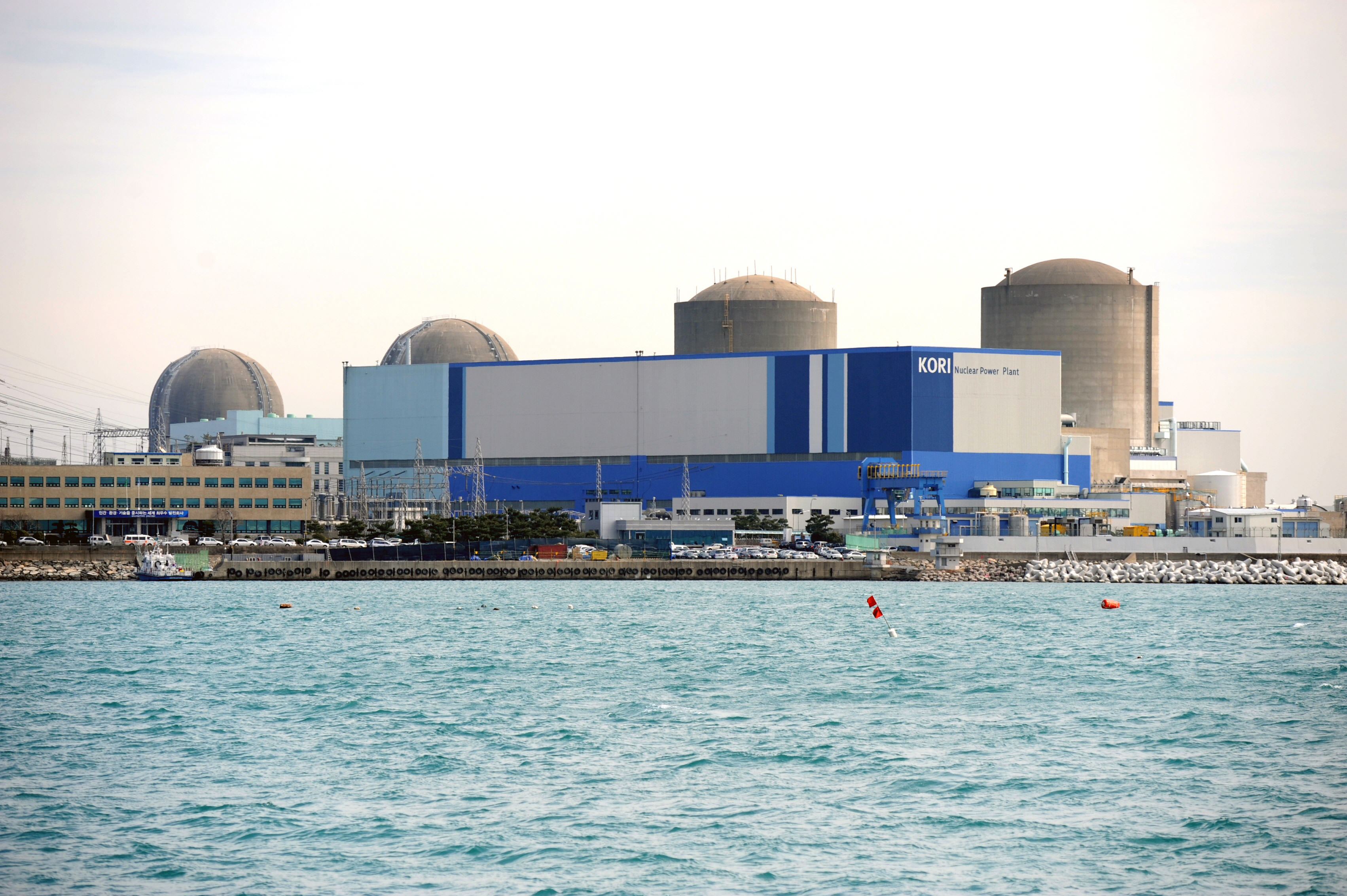
I still remember the iodine tablets.
Not taking them. Just knowing they were there.
In drawers. In presses. In Fridges. In kitchen cupboards around the country. Small packets of official anxiety, sent to Irish households in 2002 in case of a major nuclear accident abroad. The Department of Health later confirmed that Ireland was the only country to issue iodine tablets to every household at the time. Nothing says “energy policy” quite like posting thyroid medication to the nation.
I write this as an Irishman, but not as someone living in Ireland. I have lived in Spain since 2008. So this is not a domestic “we should” argument. It is the view of an interested outsider looking in. Irish by birth. Energy analyst by trade. Slightly exasperated observer by long experience.
And now nuclear is back in the Irish conversation.
Recent commentary has argued that, with electricity bills high and renewable delivery lagging, the case for reopening Ireland’s nuclear power debate has never been stronger. It is a fair debate to have. Energy costs are painful. Grid constraints are real. Data-centre demand is politically and technically unavoidable. Ireland needs clean power, security, affordability, and resilience.
But reopening a debate is not the same as reaching the right conclusion.
And in the Irish context, domestic nuclear power still makes very little sense.
Ireland’s grid is the wrong shape for nuclear
The strongest argument against nuclear in Ireland is not peak demand.
It is minimum demand.
EirGrid’s 2024 All-Island Transmission System Performance Report recorded a winter peak of 7,148 MW on 27 November 2024. That is the number nuclear advocates tend to point at. Big number. Serious face. Possibly a chart with a dramatic arrow.
But the more important number is the minimum summer night valley. In 2024, that was just 3,095 MW, recorded at 05:41 on 9 June. In 2020, it was even lower: 2,395 MW. That is the actual grid a nuclear plant would have to fit into. Not the political fantasy grid. The real one.
A conventional 1 GW reactor would represent roughly one-third of that low-demand period. Even smaller units would still be chunky in a small island system. Yes, nuclear plants can technically load-follow. But technical possibility is not the same as economic sense.
Nuclear economics depend on high utilisation. Build an expensive asset, then run it flat out for decades. That is the model. Turn it down because demand is low or wind is strong, and the capital cost does not politely disappear. It just gets spread over fewer megawatt-hours.
Ireland’s electricity challenge is not a lack of theoretical baseload.
It is flexibility.
Peaks. Troughs. Ramps. Wind surges. Wind lulls. Solar midday output. Evening demand. Interconnector flows. Battery cycles. Demand response. Dispatchable backup.
A large nuclear unit is not naturally suited to that system.
It is a fridge magnet in a clock mechanism.
The outage problem does not go away
There is another awkward question nuclear advocates need to answer.
What happens when the plant goes offline?
Nuclear reactors require planned outages for refuelling and maintenance. The US Energy Information Administration says nuclear plants typically refuel every 18 to 24 months, and that outages are usually longer than the refuelling itself because maintenance, upgrades, and repairs are carried out at the same time.
So if Ireland had a 1 GW reactor, the system would still need enough dispatchable capacity, storage, demand flexibility, and interconnection to cover the loss of that reactor when it was unavailable.
That is not a footnote.
That is the system cost.
In a large continental grid, losing a gigawatt is inconvenient. In a small island system, it is a major event. Nuclear does not remove the need for backup. It creates a large single contingency that the rest of the system must be built around.
So the real question is not simply: can nuclear supply clean power?
It is: can Ireland justify building a nuclear plant and then also building the parallel system needed for the days or weeks when that plant is offline?
Because that is what reliability requires.
Physics, tragically, does not care about op-eds.
The cost and timeline comparison is brutal
New nuclear is slow.
Really slow.
Hinkley Point C in the UK was once expected much earlier and is now delayed into the 2030s, with EDF’s 2024 update putting expected cost at up to £35bn in 2015 prices. That is before translating the lesson into Irish political, regulatory, and planning conditions, where optimism often goes to be mugged by a judicial review.
Lazard’s 2025 Levelized Cost of Energy analysis puts new nuclear in the US at roughly $141–220/MWh. Utility-scale solar sits around $38–78/MWh, onshore wind around $37–86/MWh, utility solar plus storage around $50–131/MWh, and onshore wind plus storage around $44–123/MWh. These are not Ireland-specific project bids, but they are a useful benchmark from a widely cited financial analysis.
Now add time.
A nuclear plant in a country with no civil nuclear generation sector, no domestic nuclear regulator, no supply chain, no operating skills base, no waste pathway, and no site would not be a 2030 solution. It would be a 2040s bet, at best.
By contrast, solar, wind, storage, interconnection, demand response, and grid upgrades can be delivered in increments. Utility-scale solar can often be built in 6–12 months once consented and grid-connected. Battery projects are modular and can also be delivered far faster than nuclear. Onshore wind is slower, especially through planning and grid connection, but the construction phase is typically measured in months to a couple of years, not decades.
So the practical comparison is not nuclear versus candles.
It is nuclear versus portfolios: solar, wind, storage, interconnection, demand response, grid reinforcement, flexible backup, and smarter large-load management.
That portfolio can learn. It can adapt. It can fail partially without bankrupting the national strategy.
Nuclear is more binary.
And more expensive when it goes wrong.
Data centres could help, if they behave like grid assets
Ireland’s data-centre electricity demand is astonishing. The Central Statistics Office reported that data centres consumed 22% of metered electricity in 2024, up from 5% in 2015. Consumption rose from 6,335 GWh in 2023 to 6,969 GWh in 2024.
But the data-centre debate is too often framed lazily.
Data centres are not automatically villains. I say that as a former developer of an Irish data centre, CIX.ie, in Cork. The issue is not whether data centres exist. They do. They are part of modern digital infrastructure. The issue is whether they behave like passive loads or active grid assets.
A data centre that demands power 24/7, ignores grid stress, and points to corporate PPAs as a moral fig leaf is part of the problem.
A data centre that can shift load, reduce demand when requested, support local constraints, co-locate with renewables, contract storage, provide flexibility, and participate properly in demand-side response can be part of the solution.
Ireland’s Large Energy Users policy is at least moving in that direction. The CRU’s 2025 decision assumes data centres procuring renewable energy equivalent to 80% of annual demand in its illustrative analysis, and the broader policy direction is clear: large loads need to contribute to the system, not simply lean on it.
That is the right framing.
Not “ban data centres”.
Not “build nuclear for data centres”.
But: if large loads want grid capacity, they should help the grid.
That is not anti-business. It is basic engineering discipline.
The SMR objection is coming. It is weak.
Someone will now mention small modular reactors.
They always do.
SMRs are the favoured escape hatch in modern nuclear debates because they sound like nuclear without the inconvenient bits: smaller, repeatable, factory-built, safer, cheaper, faster. A reactor you can order like a prefab kitchen, presumably with a tasteful backsplash and a twenty-year licensing process.
The problem is that commercial SMRs are still unproven.
The IEA says global nuclear capacity stayed flat in 2025: 3 GW of new nuclear came online, but that was offset by 3 GW of retirements, leaving global nuclear capacity at 420 GW. Construction started on 12.2 GW of nuclear in 2025, mostly in China and Russia. Interesting, yes. A bankable Irish electricity strategy? No.
Ireland would still need legislation, regulation, siting, emergency planning, waste management, security, skills, finance, and public consent. The “small” in SMR refers to reactor size. It does not magically shrink institutional complexity.
At this point, building Irish energy policy around SMRs is not pragmatism. It is delay when urgency is what is required.
Ireland might as well wait for other myths like fusion, cheap green hydrogen, or unicorn farts with grid-forming inverter capability.
The politics are as hard as the engineering
Ireland has a legal barrier too. The Electricity Regulation Act 1999 states that authorisation criteria “shall not provide for the use of nuclear fission for the generation of electricity.” Changing that is possible. But changing the law would be step one of about fifty.
Ireland would then need institutions.
A regulator. A waste policy. A decommissioning framework. Emergency planning. Site selection. Security. Public consultation. Finance. Skills. Long-term political consensus.
And then there is social licence.
Chernobyl is not ancient history for Irish people of a certain age. Sellafield is not abstract. The EPA says low levels of artificial radioactivity can still be detected in sediments, seawater, seaweeds, fish, and shellfish from the Irish Sea, although discharges have fallen significantly since their peak in the 1970s and 1980s.
Technically, that does not prove Ireland should never consider nuclear.
Politically, it matters enormously.
Infrastructure does not get built in an Excel file. It gets built in places. Near people. Through planning systems. Under scrutiny. With memories attached.
Ireland already struggles to build enough homes, grid lines, wind farms, water infrastructure, and transport projects. A nuclear site would not simply face NIMBYism. It would face national-scale resistance with historical depth.
Ignoring that would not be brave.
It would be naïve.
The better Irish strategy is already visible
The stronger Irish pathway is not mysterious.
Build the grid. Faster. More lines. More substations. More digital control. More connection capacity. More political honesty about the infrastructure required for electrification.
Accelerate renewables already in the pipeline. Ireland reached 8 GW of renewable electricity connected to the network in March 2026, according to ESB Networks and the Department of Climate, Energy and the Environment. That is not enough, but it is a real platform to build from.
Treat storage as core infrastructure. Batteries for short duration. Longer-duration storage for multi-hour and multi-day balancing. Thermal storage. Pumped hydro where feasible. Flexible demand. Clean dispatchable backup for rare events.
Use interconnection intelligently. Ireland does not need to own every generation technology domestically to benefit from system diversity. Interconnection with France gives access to a broader European electricity mix, including French nuclear, without Ireland taking on domestic nuclear siting, waste, construction, and political risk.
And make large loads earn their place. Data centres, hydrogen electrolysers, industrial heat, EV fleets, and other flexible demand should become grid partners, not just grid customers.
This is not anti-nuclear ideology.
It is pro-system realism.
The world is voting with deployment
Globally, the transition is moving.
Ember’s Global Electricity Review 2026 found that clean electricity sources grew fast enough to meet all new global electricity demand in 2025, preventing an increase in fossil generation. Solar alone met 75% of the net increase in electricity demand, while solar and wind together met almost all of it.

Capacity additions tell the same story. IRENA’s Renewable Capacity Statistics 2026 reported that renewable power capacity increased by 692 GW in 2025, including 511 GW of solar and 159 GW of wind.
One set of technologies is scaling by the hundreds of gigawatts per year.
Nuclear is fighting to add single digits net.
That does not mean nuclear is useless globally. It does mean it is a strange place for Ireland to put scarce political, financial, regulatory, and planning capacity.
Ireland’s energy problem is urgent. High prices hurt households. High prices hurt businesses. Fossil fuel exposure hurts energy security, and resilience. Slow grid buildout hurts everything. But urgency is not an excuse to choose the slowest available tool.
Nuclear in Ireland sounds serious because it is large, expensive, centralised, and wrapped in engineering mystique.
But seriousness is not measured in concrete volume.
It is measured in fit.
And domestic nuclear does not fit Ireland’s grid, demand shape, political history, planning reality, delivery timeline, outage risk, or near-term climate needs.
Back to those iodine tablets.
They were a symbol of fear. But also a reminder that energy choices carry long shadows. Ireland has enough experience with imported risk, fossil volatility, and infrastructure delay to know better than to chase a technology whose best-case timeline belongs to the 2040s.
The better future is already visible.
Wind. Solar. Storage. Interconnection. Flexible demand. Smarter data centres. Electrified heat and transport. A stronger grid. More local generation. Less exposure to imported fuels.
Ireland does not need nuclear to be serious about energy.
It needs to build the clean, flexible, resilient electricity system that actually matches the island it is.
Urgently.
And with a little less faith in magic reactors.
Photo credit IAEA Imagebank