
Author: Tom Raftery
-

The Grid Is Becoming Industrial Policy
Grid access is becoming a constraint on factories, data centres, renewables and electrification. Power infrastructure is moving from an energy issue to an industrial strategy issue.
-

The Content Compounds Long Before the Audience Does
Reaching 100,000 YouTube subscribers was gratifying, but the number is less interesting than what accumulated along the way. Years of specialist interviews taught me that the real value of sustained publishing is not individual content performance. It is building a coherent body of work that compounds.
-
When a Podcast Archive Becomes a Research System
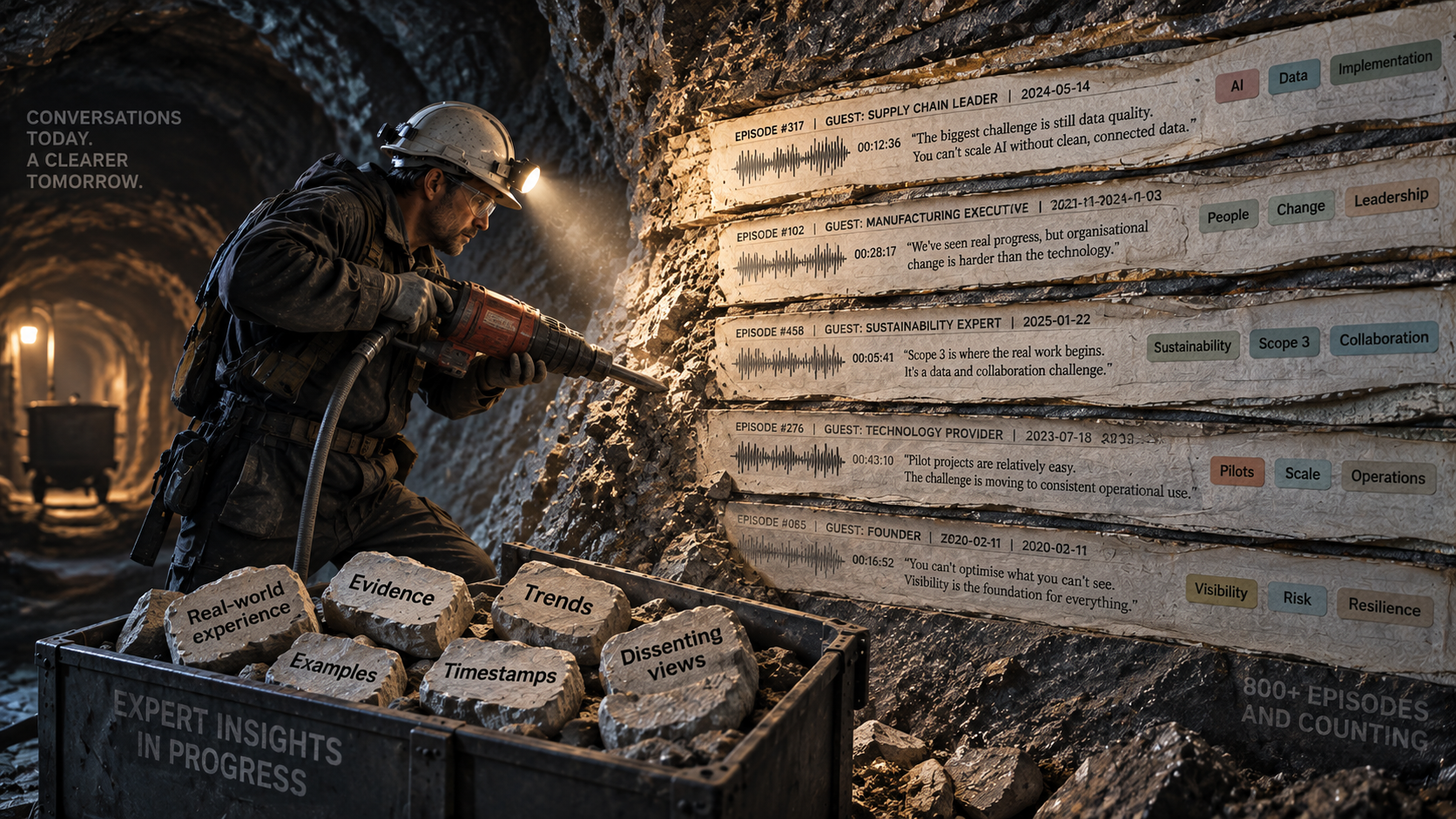
A peer-reviewed paper based on 52 of my podcast interviews made me realise I had built more than a content archive. Here’s how I now turn hundreds of transcripts into searchable, traceable evidence, and why the research base keeps getting stronger as new interviews are added.
-
Long-duration energy storage has a market problem
The most challenging moment in renewable energy systems occurs during high demand, especially on cold evenings without wind or solar output. Effective energy storage requires precise definitions of duration and performance. The report emphasises the need for tailored contracts and market structures to support diverse storage technologies and address specific system requirements.
-
Your Supply-Chain AI Pilot Worked. So Why Didn’t It Scale?
This post examines why supply-chain AI pilots often fail to deliver lasting value, focusing on the importance of operational capability over technical success. Based on 43 interviews, it identifies key mechanisms like data production and decision authority, emphasising that without proper integration and organisational support, even successful models can falter.
-
The Visibility Trap: Why Seeing More Does Not Make Supply Chains Resilient
Despite significant investments in technology, businesses often fail to act effectively on incoming data due to various operational hurdles. Resilience requires not just visibility, but proper decision-making, accountability, and action to enhance operational performance.
-

The Supply Chain Transformation Isn’t the Technology
Researchers analysed interviews from a podcast archive of over 400 episodes, revealing that technology alone does not ensure supply chain sustainability. Instead, management practices, such as sustainable risk management and collaboration, were crucial for achieving outcomes. The study urges leaders to focus on management problems and the appropriate technology needed to address them.
-

AI Is Not Software. It Is Infrastructure
Water disputes highlight the urgent need for sustainable practices amid increasing AI infrastructure demands. With AI moving from a technology-driven focus to an infrastructure and governance concern, organisations must integrate sustainability into their AI strategies. This careful approach can mitigate risks related to energy use, water scarcity, and community impact.