
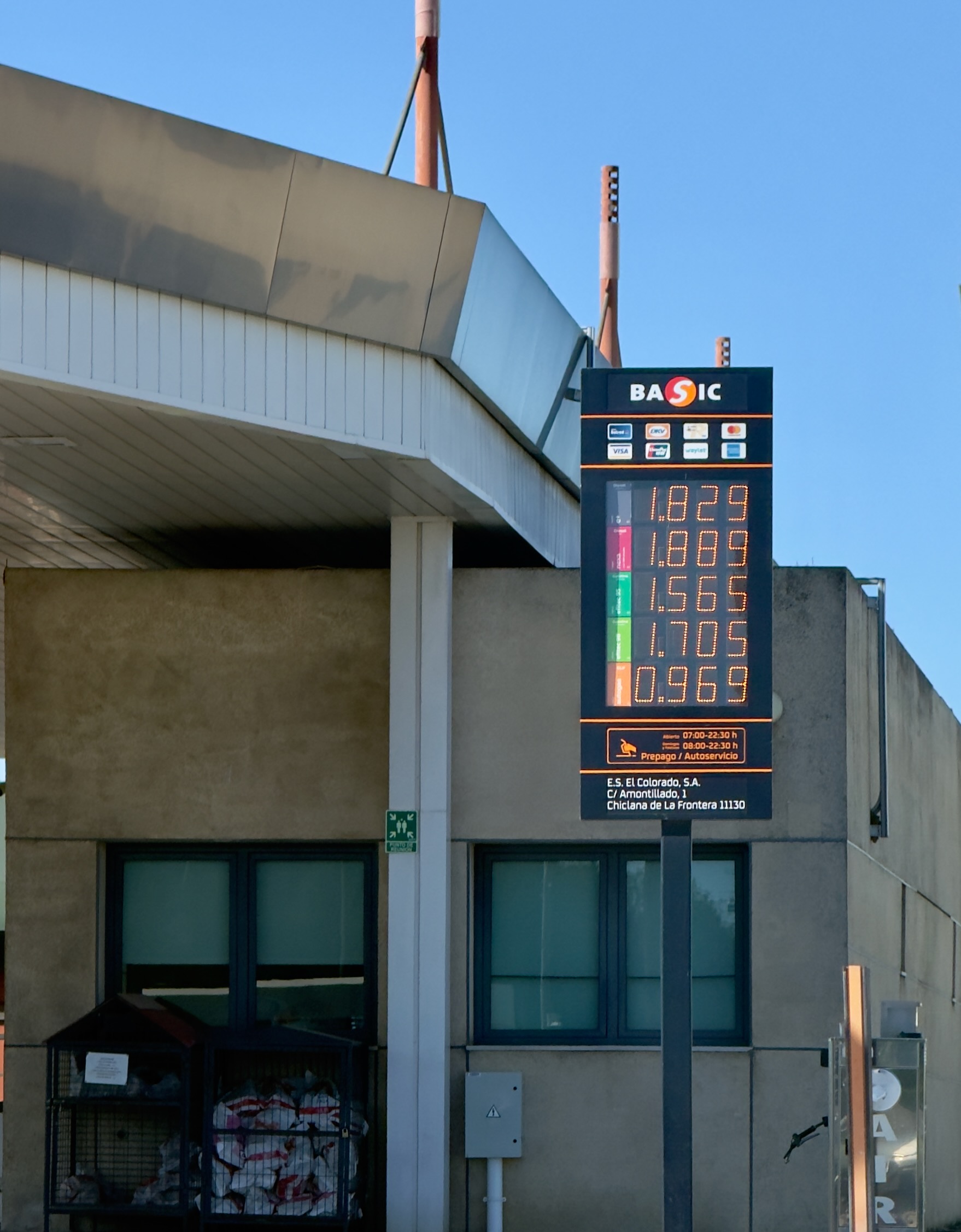
I was looking at fuel prices the other day and thinking about how absurd this still is.
A conflict thousands of kilometres away. Tankers delayed. Insurance costs rising. Traders getting jumpy. And suddenly that ripples into household bills, freight costs, food prices, and boardroom planning across Europe and far beyond. That is the basic indignity of fossil fuel dependence. It hands immense power to events you cannot control, in places you do not govern, through systems you did not design.
That is the real lesson from the US-Israel war on Iran.
Reuters reported that IEA Executive Director Fatih Birol believes it could take around two years overall to restore the energy output lost in the Middle East conflict, while warning that markets may be underestimating the consequences of a prolonged closure of the Strait of Hormuz. In the UK, Ed Miliband’s response has not been to pretend that more North Sea drilling will somehow magic away global price volatility, but to argue for faster solar deployment, stronger EV uptake, and reforms to reduce the grip of gas on electricity prices. That is not ideological theatre. It is the beginning of a more realistic security doctrine.
The important point, though, is this: the war did not create the clean energy transition. Solar was already scaling. EVs were already getting cheaper. Batteries were already moving down the cost curve. Electrification was already spreading into buildings, transport and industry. What the war has done is expose, once again, how brittle the fossil system remains, and why the alternatives now look less like moral preference and more like strategic common sense.

The data says…
The IEA’s Global Energy Review 2026 released this morning, is striking for what it confirms and for what it does not say. Global energy demand rose by 1.3% in 2025, slower than in 2024. Electricity demand, however, grew by around 3%, more than twice as fast. Solar PV was the single biggest contributor to the increase in global energy demand, accounting for more than 25% of the growth, the first time a modern renewable source has led global energy demand growth. Low-emissions sources together accounted for nearly 60% of demand growth. That is not a symbolic shift. That is system-level movement.
On the power side, the numbers are stronger still. Renewables and nuclear together added more generation than the entire increase in global electricity supply in 2025. Solar alone posted a record 600 TWh increase in generation, the largest annual increase ever recorded for any source outside post-crisis rebound periods. Renewable capacity additions hit 800 GW, while battery storage additions reached 108 GW, up 40% year on year. The direction of travel is unmistakable. But so is the caveat: fossil fuels still generated 57% of global electricity in 2025, with coal alone still the largest single source at 34%. This is acceleration, not completion.
Electric vehicles are following a similar arc. The IEA says electric car sales rose more than 20% in 2025 to 21 million vehicles, meaning roughly one in four new cars sold globally was electric. Its Global EV Outlook 2025 also found that first-quarter 2025 sales were up 35% year on year, with China projected to reach around 60% EV share of new car sales in 2025. In Europe, Reuters reported that BEV sales in the main markets surged 29.4% in the first quarter of 2026, helped by rising petrol prices after the war on Iran. That matters because it shows two forces working together: a structural cost and technology shift, and a geopolitical shock that makes oil dependence look even less attractive.
The affordability story is becoming harder to ignore. In the UK, Autotrader says new EVs are now cheaper to buy than petrol cars on average for the first time, at £42,620 versus £43,405, based on advertised prices after discounts and grants. That qualifier matters. This is not universal unsubsidised parity across every model and market. But it is still a meaningful milestone, particularly when paired with rising consumer interest. Autotrader says visits to its new-car platform were up 21% year on year in April. SMMT adds that March 2026 was the best month ever for UK BEV registrations, at 86,120. That is not a fringe market behaving politely. That is scale starting to show up in registration data.
The heavy-duty side of transport is also beginning to move, though this is where precision matters. Electrive reported that new energy heavy-duty trucks in China reached 54% of monthly new heavy-duty truck sales in December 2025, and 29% across the full year. But its source uses China’s NEV classification, which includes fully electric and certain plug-in drivetrains, and the article itself notes that subsidy phase-outs and anticipated tax changes distorted year-end buying. So this is not evidence that diesel is finished in trucking. It is evidence that even the difficult segments are starting to electrify faster than many assumed, once economics and policy begin to align.
The emissions story remains uncomfortable. Global energy-related CO2 emissions rose by around 0.4% in 2025 to a record 38.4 Gt. That is the part nobody serious should duck. Emissions did not fall globally. But growth slowed again, China’s emissions fell by around 0.5%, India’s were essentially flat, and the IEA estimates that clean technologies deployed since 2019 avoided around 3 Gt of CO2 in 2025 alone. So the more defensible conclusion is not “we’ve peaked”. It is that clean deployment is now materially suppressing fossil fuel demand and slowing emissions growth, and in several major markets the peak is either near or already behind them.
The implications…
First, climate. The climate case remains brutal in its simplicity: the transition is happening, but not yet fast enough. Record solar growth is good. Record EV sales are good. Slower emissions growth is better than faster emissions growth. None of that changes the fact that 38.4 Gt is still 38.4 Gt. A critic is right to insist on that. But there is a difference between realism and fatalism. Realism says the transition must accelerate. Fatalism says the current progress does not matter because it is incomplete. That second argument is analytically lazy and politically dangerous.
Second, security. Fossil fuel security has always been overstated because it confuses access with sovereignty. If your country imports fuels priced on global markets and shipped through chokepoints vulnerable to war, blockade, sabotage or insurance shocks, you are exposed. Domestic clean power is not invulnerable, but it is much harder to embargo the wind, sanction the sun, or panic a battery with a tanker incident. That is why Miliband’s line about “clean energy security” resonates. It is not perfect. It is directionally right.
Third, affordability. IRENA reports that 91% of newly commissioned utility-scale renewable projects in 2024 delivered lower-cost electricity than the cheapest new fossil-fuel alternative, and that renewables avoided USD 467 billion in fossil fuel costs that year. BloombergNEF says average lithium-ion battery pack prices fell to USD 108 per kWh in 2025, while stationary storage pack prices fell to USD 70 per kWh. This does not mean every clean technology is cheap in every context. It does mean the cost trend is not moving in fossil fuels’ favour. And when wars shove oil and gas prices upwards, that advantage becomes more obvious, faster.
Fourth, resilience. This is where the critique bites hardest, and where leaders need to pay attention. Electrification is not a magic wand. It only works at scale with stronger grids, faster permitting, more storage, more flexible demand, better interconnection and more serious planning. The IEA’s Energy and AI work says data centres are set to account for nearly half of US electricity demand growth to 2030. Add EVs, heat pumps and industrial electrification, and the message is plain: the prize is huge, but the engineering challenge is real. The answer is not to retreat. It is to build the system that this new load profile requires.
The strategies…
For business leaders, the first strategy is to stop treating electrification as a CSR line item. It is a risk-management play. Fleets that electrify reduce exposure to oil-price swings. Buildings that shift to heat pumps and on-site solar reduce exposure to gas shocks. Companies that sign long-term clean power contracts are not merely polishing their brand. They are buying more predictable energy economics in a disorderly world.
For policymakers, the priority is system design, not slogan inflation. Faster grid build-out. Planning reform. Transmission investment. Storage support. Market rules that reward flexibility. Tariff structures that make electrification cheaper to use, not just cleaner to discuss. If governments want households and businesses to switch, the economics must be visible and the infrastructure must be there. Otherwise, the transition gets stuck between aspiration and irritation, which is where a lot of good ideas go to die.
For industry, the second strategy is to be honest about supply chains. Clean tech reduces one kind of dependency, but it can increase another if countries fail to diversify manufacturing, processing and grid equipment supply. So yes, push harder on domestic renewables, EVs, batteries and electrified industry. But also push on local and allied-country manufacturing, transformer supply, recycling, grid equipment, permitting capacity, and workforce development. Resilience means not swapping one bottleneck for another with a congratulatory press release attached.
The signal of change…
The best evidence that something deeper is shifting is not rhetoric. It is investment and behaviour.
The IEA’s World Energy Investment 2025 says global energy investment is set to reach USD 3.3 trillion in 2025, with USD 2.2 trillion going to clean energy technologies and infrastructure, twice the USD 1.1 trillion going to fossil fuels. Consumers are moving too. The Guardian reports that Octopus has seen a 50% rise in solar sales and a 50% rise in heat pump sales since the latest Middle East conflict began, while March was the best month ever for EV sales in the UK. Again, that war did not create these trends. But it has made the old system’s weaknesses visible in a way that no white paper ever could.
That brings me back to the fuel-price board. To the family budget. To the logistics operator. To the minister trying to explain why violence abroad still whips through bills at home.
We should not have needed this many warnings. We should have moved earlier and faster. But the clean energy transition is no longer resting on climate ethics alone. It is now being pulled forward by the hard logic of security, affordability and resilience as well. That does not make the current moment good. It makes it clarifying.
So the strongest version of the argument is not that the war on Iran is somehow good news for energy. It plainly is not. It is that every fossil fuel shock now makes the case for electrification harder to evade. Solar is booming. EVs are scaling. Batteries are getting cheaper. Investment is shifting. Emissions are still too high, but the forces that can bend them down are becoming bigger, cheaper and more strategic with every passing year.
That is not victory. But it is movement. Real movement. Movement in the right direction. And in energy, that matters.