Decentralised Power Is Not Enough
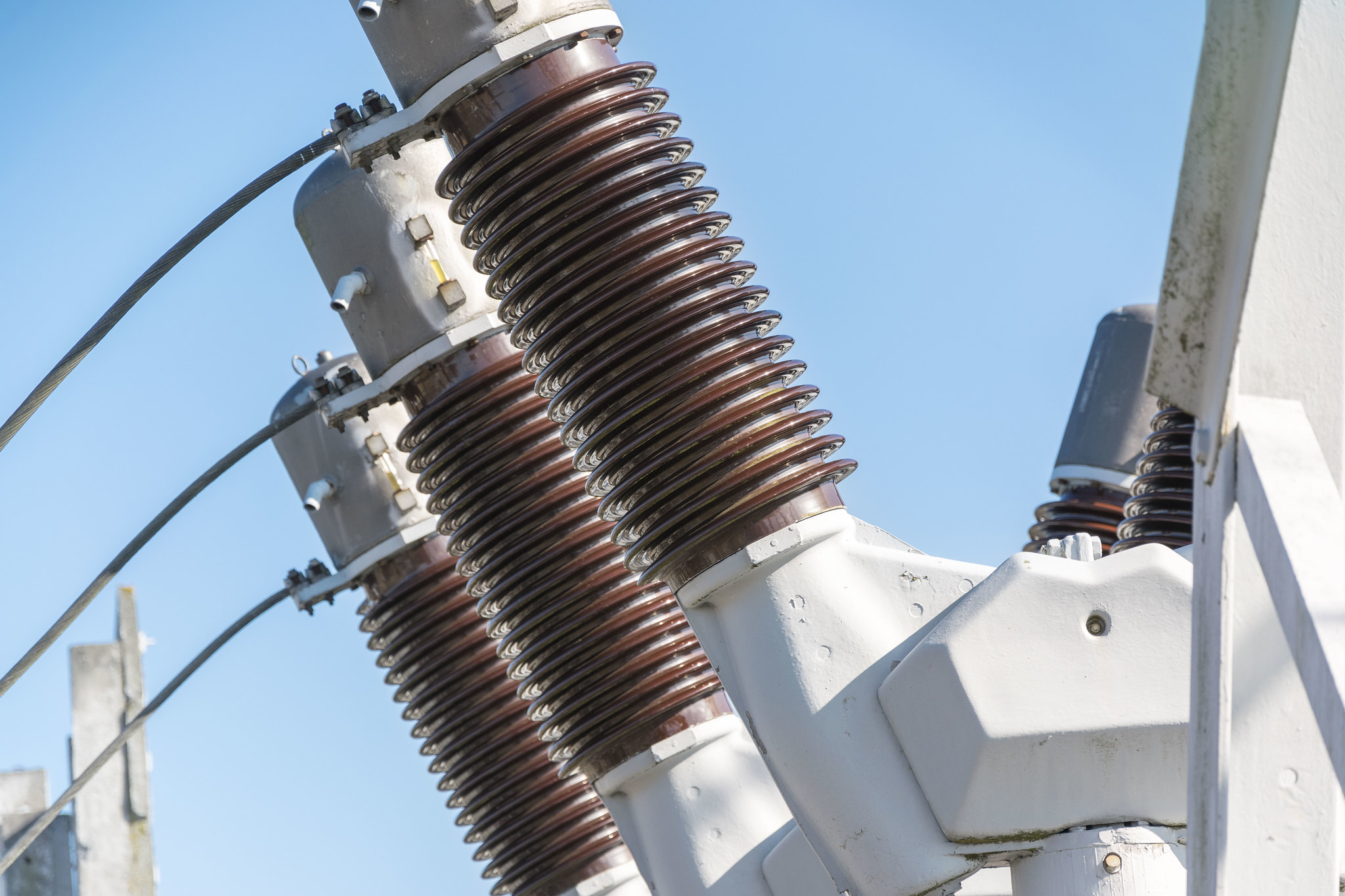
A transformer does not fail politely.
It ruptures. It burns. It turns a functioning grid into twisted metal and silence.
In Kyiv, in winter, that silence was deliberate. Substations were targeted. Thermal plants repeatedly struck. Transmission nodes became strategic objectives.
And yet hospitals kept operating. Critical services stayed alive. In some cases, rooftop solar and batteries did what centralised infrastructure could not.
Last October, I wrote Why You Can’t Drone a Solar Panel, arguing that electrification and distributed renewables are no longer just climate policy. They are strategic defence policy.
Now the IEA’s new report, Energy System Resilience: Lessons Learned from Ukraine, turns that instinct into doctrine.
Its message is uncomfortable.
Decentralisation helps.
But decentralised power is not enough.
Europe has largely completed Phase 1 of the transition – deployment.
Phase 2 is preparedness.
And Phase 2 will determine whether the electric age is durable or dangerously fragile.
The Data Says…
Ukraine is not a metaphor. It is a stress test.
The IEA makes a crucial distinction: energy security is about long-term adequacy. Energy resilience is about surviving events beyond planning assumptions.
Security asks: do we have enough?
Resilience asks: what happens when it breaks?
From Ukraine’s experience, the IEA extracts ten pillars of resilience: physical hardening, restoration planning, cyber defence, communications redundancy, spare parts strategy, decentralisation, demand flexibility, and emergency governance.
Some lessons are stark.
Centralised generation and high-voltage substations proved highly vulnerable when systematically targeted. Distributed resources were materially harder to neutralise at scale.
But the deeper lesson is this:
Resilience is restoration velocity.
How fast can you reroute power?
How fast can you replace equipment?
How fast can you restart?
Meanwhile, Europe remains structurally exposed. The EU’s dependence on imported fossil fuels translated into enormous economic pain during the 2021–2024 energy crisis. Volatility was not theoretical. It was invoice-level reality.
At the same time, the economics of clean power have tipped decisively. According to IRENA, 91% of newly commissioned utility-scale renewables in 2024 delivered electricity cheaper than the cheapest new fossil alternative. Globally, renewables avoided roughly USD 467 billion in fossil fuel costs that year.
The transition is accelerating because it now makes financial sense.
The question is whether Europe is building a system that can endure coordinated physical attack, cyber intrusion, extreme weather, and supply chain disruption, or merely a cleaner version of yesterday’s vulnerability.
The Implications…
1. Security Is Now Electrical
For decades, European energy security meant pipelines and tankers.
Ukraine reframes it.
The electricity grid is now front-line infrastructure.
Attacks did not need to annihilate entire systems. They only needed to degrade reliability. Repeated strikes on substations were enough to destabilise daily life.
If your economy assumes uninterrupted electricity, grid fragility becomes macroeconomic risk.
Security is no longer about molecules.
It is about nodes.
2. Affordability Depends on Continuity
Energy affordability debates often orbit wholesale prices.
Ukraine demonstrates something harsher: the cheapest kilowatt-hour is the one that arrives during crisis.
Resilience investments feel expensive, until failure costs more.
Spare transformers and redundant communications links look indulgent until they become the only thing standing between disruption and collapse.
3. Resilience Is Logistics in Disguise
Large power transformers are not off-the-shelf commodities. They are heavy, bespoke, slow to manufacture, and globally sourced.
Restoration requires:
- Standardised equipment
- Pre-positioned spares
- Cross-border cooperation
- Logistics capable of moving oversized assets fast
In other words, resilience is supply chain architecture wearing a hard hat.
Europe’s fragmented regulatory landscape introduces friction precisely where speed matters most.
That friction is risk.
4. Clean Progress Must Be Crisis-Proof
Electrification reduces fossil dependency. It decentralises generation. It lowers exposure to imported volatility.
But a clean system without hardened cyber defences, operational discipline, and restoration readiness is still fragile.
A low-carbon grid that fails under pressure does not strengthen political support for climate action.
It undermines it.
The Strategies…
Phase 2 demands seriousness. Not slogans.
1. Treat Grid Preparedness Like Defence Planning
Ukraine’s experience shows the necessity of strategic reserves for critical components, particularly large transformers and high-voltage equipment.
Standardisation reduces delays. Pre-negotiated logistics contracts accelerate recovery. Regular black-start drills expose weaknesses before adversaries do.
Resilience planning should resemble defence procurement, not routine maintenance.
2. Design for Survival, Not Just Efficiency
Traditional grid design optimises for elegance.
Modern resilience demands graceful degradation.
That means:
- Microgrids for hospitals and emergency services
- Distributed storage paired with local renewables
- Islanding capability so critical nodes can operate independently when transmission fails
Efficiency is admirable.
Survivability is non-negotiable.
3. Elevate Cyber to Strategic Risk
An electrified economy becomes digitally exposed.
Ukraine experienced cyberattacks on its grid years before full-scale invasion. Operational technology systems are targets.
Utilities and major energy users must treat OT security as board-level risk. Segmentation, monitoring, and recovery protocols are strategic safeguards, not compliance exercises.
A grid without secure communications is decorative metal.
4. Activate Demand Flexibility
Consumers are not passive load.
Smart EV charging, industrial load shifting, thermal storage, and demand response provide system flexibility during stress.
Flexibility buys time. Time restores systems.
5. Avoid Recreating Centralised Fragility
Transitions often reproduce old vulnerabilities in new forms: massive battery hubs, hyper-concentrated data centre clusters, oversized transmission corridors without redundancy.
Resilience thinking asks a blunt question:
If this fails, what happens next?
If the answer is systemic disruption, redesign.
6. Accelerate Electrification, With Discipline
Electrification remains strategically sound. It reduces import dependency and aligns with favourable economics.
But deployment alone does not equal resilience.
Preparedness does.
Electrify transport. Electrify heating. Electrify industry.
And simultaneously engineer the scaffolding that makes the system defensible, repairable, and adaptable.
Deployment is Phase 1.
Preparedness is Phase 2.
The Signal of Change…
The encouraging shift is conceptual.
The IEA’s elevation of resilience signals that energy transition and energy security are inseparable.
The EU increasingly treats grid readiness and equipment stockpiling as strategic issues, not engineering footnotes.
And falling renewable costs expand what is politically feasible. When clean power is often cheaper, resilience spending becomes economic prudence rather than ideological choice.
But the most important change is psychological.
Ukraine has forced energy professionals to think beyond optimisation and into survivability.
That is an upgrade.
Interestingly, the first confirmed cyberattack to cause a power outage occurred in Ukraine in 2015, years before the invasion. It was not an anomaly. It was a preview. Electrified societies are digitally targetable. The warning arrived early. The design response lagged.
Conclusion
Return to that transformer.
When it failed, the question was not whether Europe had reduced emissions.
The question was whether the system could absorb impact and continue functioning.
Europe is advancing through Phase 1. Renewable deployment is accelerating. Electrification is expanding. Economics increasingly favour clean power.
But decentralised power is not enough.
Without hardened infrastructure, spare parts strategy, cyber defence, restoration drills, and operational discipline, a cleaner grid can still be brittle.
Ukraine has shown that resilience is built before a crisis or improvised during it.
Improvisation is heroic.
It is not strategy.
Energy security in the 21st century is no longer a fuel question.
It is an architecture question.
And architecture can be engineered – deliberately, rigorously, and before the next rupture.
Photo credit J Triepke on Flickr
Leave a Reply