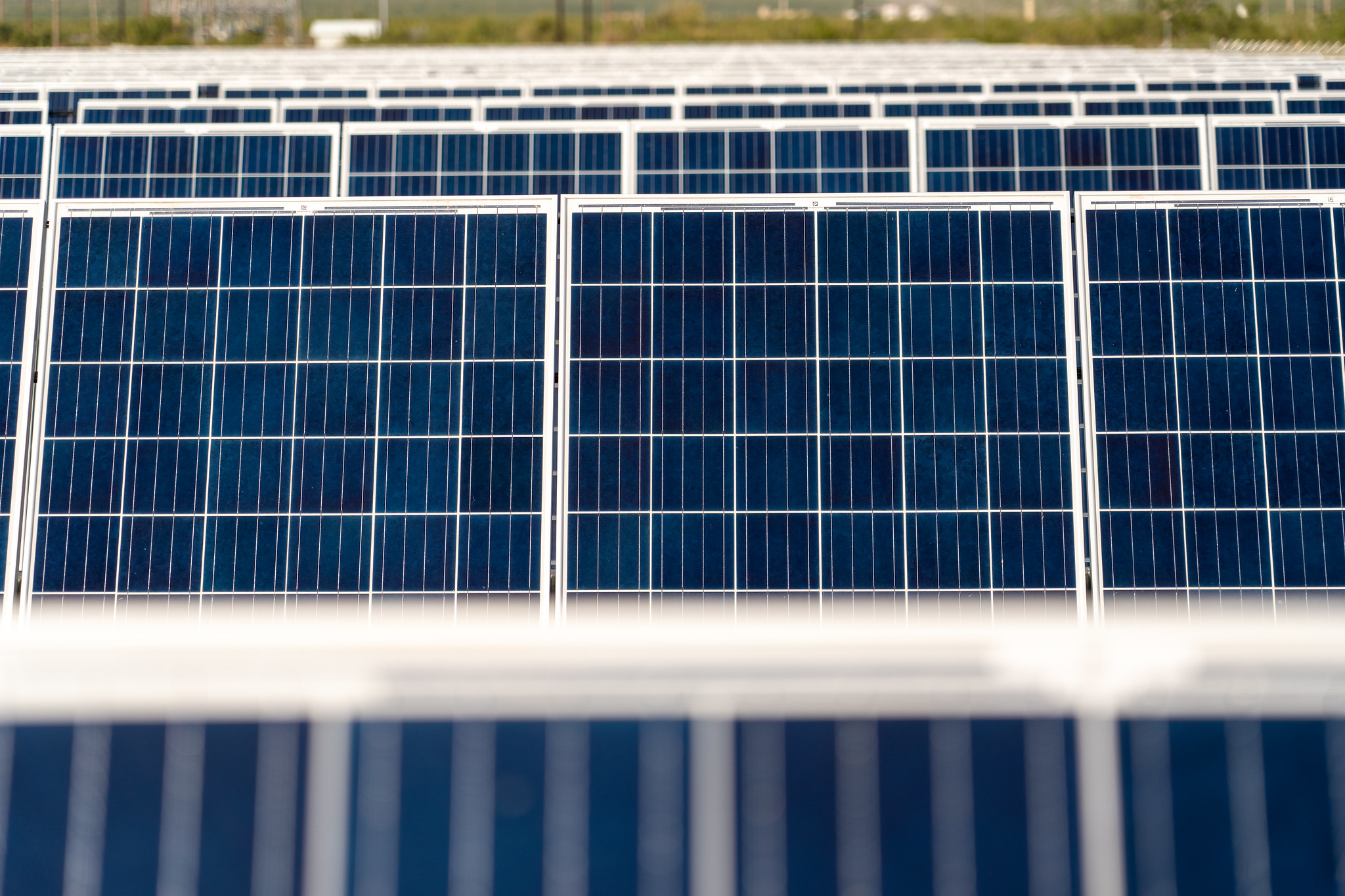
For the first time in history, renewable electricity generation is set to overtake coal.
It won’t make headlines in every newspaper, and yet it should.
Because this isn’t a symbolic milestone. It’s a structural, economic, and technological shift that signals something profound about the direction of the global energy system. And for leaders in energy and sustainability, it represents both an inflection point and a call to action.
The Context: Rising Demand, Rising Ambition
According to the IEA’s Electricity Mid-Year Update 2025, global electricity demand is set to grow by 3.3% in 2025 and 3.7% in 2026. That’s more than twice the rate of overall energy demand growth. And it’s not being driven by population growth or economic expansion alone, although those matter too. It’s being driven by three interlocking megatrends:
- Electrification of transport, heating, and industry.
- Digitalisation, with data centres, AI, and 5G all drawing serious power.
- Climate resilience, especially cooling, in a world increasingly shaped by record heatwaves.
In this environment, the grid is becoming the backbone of decarbonisation. That makes where our electricity comes from matter more than ever.
The Tipping Point: Renewables Overtake Coal
In 2024, wind and solar surpassed 4,000 TWh of global generation. By the end of 2025, they’ll top 5,000 TWh. By 2026, they’ll break 6,000 TWh, providing nearly 20% of global electricity. That’s a near fivefold increase from a decade ago.
Coal, meanwhile, has peaked. Its share of global electricity is set to fall below 33% for the first time in a century.
And here’s the real shift: renewables, not just wind and solar, but also hydro, bioenergy, and geothermal, are expected to generate more electricity than coal in either 2025 or 2026, depending on weather and economic trends.

Let that settle for a moment.
The dirtiest fuel in history is being overtaken by the cleanest sources we’ve ever had. That’s not a PR moment. That’s a fundamental reordering of the power stack. And we’re not going back, any more than we’re going back to the era of kerosene lighting.
The Economic Drivers: Renewables Are Cheaper, and Getting Cheaper
This isn’t happening because the IEA asked politely.
It’s happening because solar and wind are now the cheapest forms of new electricity in most parts of the world. According to IRENA, 91% of all new renewable capacity added in 2024 had lower costs than electricity from fossil fuels. In many regions, building new solar or wind is cheaper than running existing coal plants.
Even in India, where coal is deeply entrenched, according to a May 2025 report by the India Energy & Climate Center (IECC) [PDF], the levelised cost of electricity (LCOE) for standalone solar in India is now around ₹2.3–2.5/kWh (about $0.027–0.030/kWh), making it the lowest among major global economies. In the US, the levelised cost of energy (LCOE) for utility-scale solar is now under $40/MWh in high-resource areas unsubsidised, per Lazard. That’s below the cost of most fossil fuel generation, even before factoring in tax credits or carbon pricing.
As costs continue to drop and technology improves, there’s less and less justification for new coal. And as carbon border adjustment mechanisms and emissions trading systems ramp up, the economics of coal are indefensible.
The Reliability Challenge: Coal Is Falling, But Flexibility Must Rise
The IEA report makes clear that more frequent negative electricity prices are emerging in markets like Germany, Spain, and the Netherlands. In the first half of 2025, 8–9% of hours in these countries had negative wholesale prices. That’s double last year.
The reason? Renewables are flooding the grid during periods of low demand, but there’s not enough flexibility to absorb the surplus.
Storage, demand response, and grid interconnection will all be crucial. Yet progress remains patchy.
In Spain’s April 2025 blackout, one contributing factor was the inability to adapt fast enough to volatile supply-demand conditions. But as I wrote at the time, renewables were wrongly scapegoated. The blackout stemmed from a cascading infrastructure failure, not from solar or wind volatility. In fact, my EV kept my home’s critical devices powered for several hours via V2L while the grid was down. You can read more on that here: Spain’s Blackout: Why Renewables Weren’t to Blame.
The energy transition doesn’t just require more clean electrons, it requires smarter systems.
The Geopolitical Ripple: Winners, Losers, and Supply Chains
The rise of renewables reshapes geopolitics.
China controls over 80% of the global supply chain for solar PV, and dominates wind turbine production. The US is trying to onshore clean energy manufacturing, but remains deeply dependent on imported equipment and minerals. Europe is somewhere in between.
As coal demand contracts, countries reliant on coal exports, like Indonesia, South Africa, and Australia, will face structural economic shifts. Some are investing in renewables or green hydrogen to diversify. Others are clinging to legacy exports.
Meanwhile, those who invest early in grid resilience, domestic manufacturing, and clean tech R&D are setting themselves up for economic leadership.
And there’s another dimension here: energy security. Every new gigawatt of domestic wind and solar is one less barrel bought from autocratic petro-states like Russia, Saudi Arabia, or Venezuela. That means more money stays at home, more jobs are created locally, and fewer foreign policy decisions are constrained by oil diplomacy. Renewable energy isn’t just a decarbonisation lever, it’s an independence strategy.
The Emissions Impact: A Plateau, Then a Fall
CO2 emissions from power generation rose 1.2% in 2024, despite the hottest year on record. But thanks to renewables scaling fast, the IEA expects emissions to plateau in 2025 and begin declining in 2026.

That’s significant. The power sector is the single largest source of energy-related emissions globally. Flattening its emissions curve is essential to staying within 1.5°C.
Yet plateauing is not enough. Power sector emissions must fall by over 60% this decade to align with net-zero pathways, according to the IEA’s own Net Zero Emissions by 2050 Scenario.
So while the renewables milestone is momentous, it’s also a reminder: this is just the starting line.
The Call to Business: Electrify Everything, Clean Everything
For business leaders, the implications are clear:
- The grid is your future. Whether you run a logistics fleet, a data centre, a factory, or a multinational HQ, your carbon footprint will increasingly depend on grid emissions and how fast your region decarbonises.
- Act now on flexibility. With negative prices rising and capacity factors shifting, investing in storage, load-shifting, and smart controls isn’t just green. It’s strategic.
- Clean your supply chains. If you’re sourcing from countries or suppliers powered by coal-heavy grids, your scope 3 emissions are at risk, and so is your reputation.
- Respond to stakeholder pressure. Investors, employees, and customers increasingly expect companies to run on clean power. Failing to transition can cost you talent, trust, and capital.
- Mitigate legal risk. With the recent ICJ climate ruling placing responsibility on states, and potentially corporations, to reduce emissions, supply chain emissions are no longer just a PR problem. They’re a legal one. If your business is enabling fossil fuel use, directly or indirectly, you may be in the crosshairs.
- Build for resilience and cost. Renewables aren’t just cleaner. They’re cheaper. And in a volatile energy world, they’re the key to cost stability, energy independence, and long-term competitiveness.
Final Thought: There’s No Time to Waste
The transition from coal to renewables isn’t just about replacing one energy source with another.
It’s about unlocking an electricity system that is cleaner, more equitable, more resilient, and ultimately more compatible with life on a warming planet.
But it won’t happen by default. The IEA report shows the direction of travel. It’s up to us, as businesses, as citizens, and as system stewards, to ensure the momentum accelerates.
If you’d like to explore the data, scenarios, and regional details, I highly recommend reading the full IEA report here: Electricity Mid-Year Update 2025.
Photo credit Jonathan Cutrer on Flickr