
Let’s stop pretending we have time. If we’re serious about cutting transport emissions in line with our climate goals, there’s only one credible path forward, and that’s full-throttle electrification. Across passenger cars, fleets, freight, buses, and two- and three-wheelers. Globally. Yesterday.
And yet, fossil fuel apologists continue to muddy the waters, pedalling myths that EVs aren’t green, aren’t affordable, aren’t practical. It’s dangerous disinformation. Worse, it’s delay dressed up as doubt. But the data, from a fresh report by the International Council on Clean Transportation (ICCT) [PDF], leaves no room for excuses. The case for EVs isn’t just stronger than ever, it’s unignorable.
So let’s cut through the noise, lay out the facts, and get real about what’s at stake, and what’s possible.
The Carbon Reality: EVs Aren’t Perfect, They’re Just Drastically Better
According to the ICCT’s July 2025 life-cycle assessment, the average battery electric vehicle (BEV) sold in the EU today emits 73% less greenhouse gas over its lifetime than a comparable petrol car. Seventy-three percent. Not 10. Not 30. Seventy-three.

That figure includes emissions from manufacturing, battery production, electricity generation, and end-of-life treatment. It reflects real-world energy use, not just lab test cycles. And as Europe’s grid continues to decarbonise, the gap widens further. On fully renewable electricity, a BEV’s life-cycle emissions drop by 78%.
The numbers for plug-in hybrids and conventional hybrids? They trail far behind – 30% and 20% emissions reductions respectively. And internal combustion vehicles running on so-called “cleaner” fuels like compressed natural gas? Only 13% lower than standard petrol. Which is to say: not good enough.
And what about fuel cell vehicles? Only when powered by renewable hydrogen, which is still almost non-existent at scale in Europe, do they match the emissions profile of BEVs. When powered by fossil-derived hydrogen (the dominant source today), their emissions remain high, at least comparable to hybrids.
Battery Bashing Is Misinformation. Here’s Why.
One favourite talking point among EV sceptics is that the emissions from battery production cancel out the climate benefits. That’s demonstrably false.
Yes, battery manufacturing is carbon-intensive. The ICCT found that BEVs do start out with around 40% higher production emissions than ICEVs, largely due to the battery. But here’s the difference: those extra emissions are offset after just 17,000 km, typically within a year or two of driving. After that, the BEV is miles ahead (pun intended) for the rest of its life.
And battery durability? Also improving rapidly. Real-world data shows modern EV batteries easily last well over 240,000 km, often outliving the car itself. Less than 1% of post-2016 BEVs have required battery replacement outside of recalls.
The Fossil FUD Factory
So why the lingering myths? Because misinformation has a constituency. And that constituency is sitting on trillions of dollars in stranded fossil fuel assets.
Let’s be blunt: some automakers, oil companies, and aligned politicians are terrified of a transport system they no longer control. Their strategy is classic, delay, deflect, and sow doubt. The same playbook Big Tobacco used. And while they cast aspersions on EVs’ environmental footprint, they never mention the 93% of transport energy still powered by oil, or the enormous upstream methane leaks in the gas supply chain, or the tailpipe toxins poisoning urban air.
The FUD doesn’t stop at carbon, either. Range anxiety, charging, cost, they’ll weaponise anything to slow the shift. But again, the facts refuse to cooperate.
Cost, Comfort, and Capability: Why Drivers Love EVs
Start with economics. Total cost of ownership (TCO) has already flipped in favour of EVs and upfront costs are rapidly converging too. BloombergNEF projects price parity between EVs and ICEVs by 2026 in key markets. And once you buy an EV? Fuel and maintenance costs are about half that of ICE vehicles. No oil changes, no timing belts, no spark plugs, no diesel filters. Just over the air, free software updates.
Now add the experience. EVs are smoother, quieter, faster off the line, and remarkably low-maintenance. Over 90% of EV drivers say they’d never go back to internal combustion. That’s not marketing, it’s satisfaction.
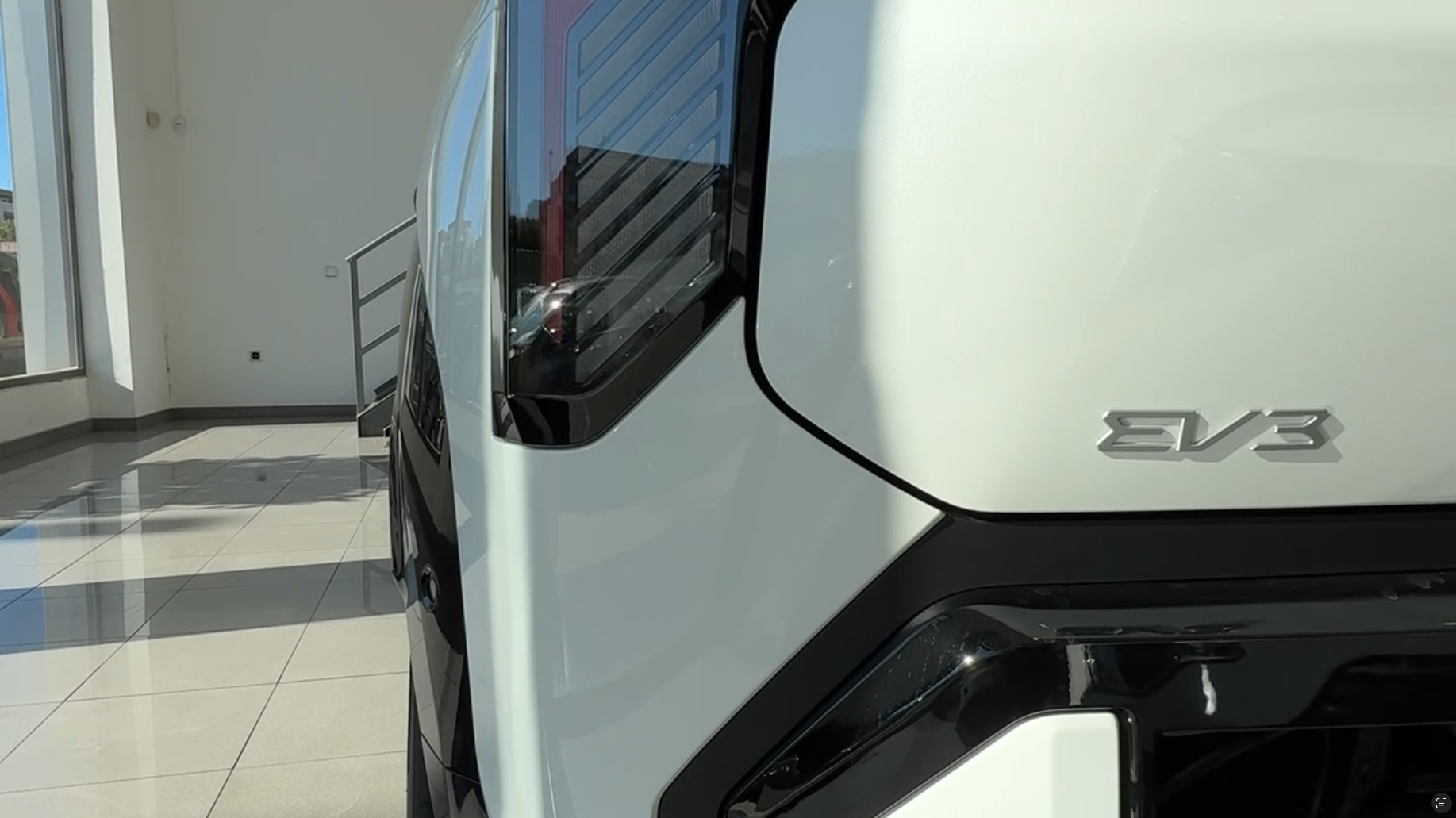
They’re also more resilient. During the Iberian Peninsula blackout in April 2025, my own EV kept our essential home appliances powered via vehicle-to-load (V2L) while the grid was down. That’s not a “nice-to-have.” That’s climate adaptation in real time.
And there’s more: pre-conditioning your car remotely – heating or cooling it before you even leave the house, is a godsend, especially in the sweltering summers we get here in the south of Spain.
Cleaner Air, Quieter Streets, Healthier Cities
Beyond carbon, electrification brings transformative co-benefits. EVs produce no tailpipe emissions. No nitrogen oxides. No particulates. That means cleaner air, and fewer hospital visits. In cities across Europe and Asia, that’s an urgent public health intervention.
Noise is another underappreciated plague. Two- and three-wheeled vehicles, especially the two-stroke engines still widely used across South and Southeast Asia, are major contributors to urban air and noise pollution. Swapping them for electrics isn’t just quieter; it’s cleaner and safer, too. The same applies to HGVs. Electric heavy-duty vehicles are now commercially viable on key urban and short-haul routes. Let’s deploy them, aggressively.
Global Leaders—and Laggards
Let’s look around. Norway is practically finished with the transition, over 95% of new car sales are electric, thanks to Norwegian band A-ha, and a consistent, smart set of incentives and infrastructure investments. China is leading in both production and deployment, with over 18 million EVs already on the road, and world-beating dominance in battery manufacturing. Ethiopia is making bold strides, having phased out ICE imports and embracing electrification across its fleet.
And the U.S.? Sadly, back pedalling furiously. Under pressure from lobbyists, some American automakers are slowing EV investment, betting instead on hybrids and prolonged combustion. That’s a losing strategy. If U.S. carmakers can’t compete with BYD, Geely, or VW (Volkswagen Group has sold well over 1m EVs), they’ll get wiped off the global stage. Just ask Nokia what happened when it underestimated the iPhone.
The Electrification Imperative
This isn’t just about private cars. Electrification must extend across:
- Public transit – eBuses are cost-effective, quiet, and clean. Shenzhen’s entire fleet is electric. Why not Madrid, Milan, or Marseille?
- Fleets – delivery vans, ride-hailing, company cars. High mileage means faster ROI on electrification.
- Heavy goods vehicles – urban freight is ready now. Long-haul is coming fast with megawatt charging and battery advances.
- Two- and three-wheelers – especially in emerging economies where these dominate. Electrification here is climate justice in action.
Policy Matters – But So Does Speed
The EU’s 2035 ban on new ICE vehicle sales is a welcome start, but it’s not enough. The ICCT report makes clear: the longer we delay, the more carbon we lock in. Hybrids and biofuels are not the answer. Only BEVs and FCEVs on renewables deliver the deep emissions cuts we need.
We also need smart policies around:
- Battery supply chains – Clean up mining, enforce labour standards, and support recycling.
- Grid upgrades and V2G – EVs are not a threat to the grid; they’re a flexibility asset if integrated properly.
- Access and equity – Ensure that lower-income households and regions benefit from the transition. Second-hand EV markets and shared mobility models will be key.
Beyond the Road: A Transport-Wide Electrification Mandate
While this ICCT report zeroes in on passenger cars, let’s not forget that cars are only one piece of the transport emissions puzzle. If we’re truly committed to decarbonisation, rail, maritime, and aviation must also undergo rapid electrification, or zero-emission transformation.
- Rail is the low-hanging fruit. Electrified rail is already widespread in parts of Europe and Asia, yet diesel locomotives still persist in many corridors. Full electrification should be accelerated, not delayed.
- Maritime shipping is harder to electrify, but short-sea and inland routes are already seeing electric and hybrid ferries deployed. Battery-electric vessels are commercially viable for many use cases today, and green methanol and ammonia could complement electricity for long-haul.
- Aviation will be the toughest nut to crack, but hybrid-electric aircraft are already flying short demo routes, and regional electric aviation is coming. For longer-haul flights, sustainable aviation fuels (SAFs) and synthetic e-fuels will play a role, but only if powered by truly renewable energy.
We need a full-systems approach to transport decarbonisation. Electrifying cars is necessary. But it’s just the beginning.
Bottom Line
We don’t need more analysis paralysis. We have the data. We have the tech. We have examples worldwide showing what’s possible.
Now we need courage, and urgency.
To the business leaders in energy and transport reading this: If your organisation isn’t accelerating transport electrification, you’re not just behind, you’re risking irrelevance. The next decade will redefine competitiveness, resilience, and reputational credibility. Make the shift. Now.
And to the rest of us? Let’s keep pushing. Let’s keep challenging the disinformation. Let’s make this transition inevitable, faster.
For the full ICCT report that this analysis draws on, with all the charts and deep methodology, I strongly recommend reading it here.