
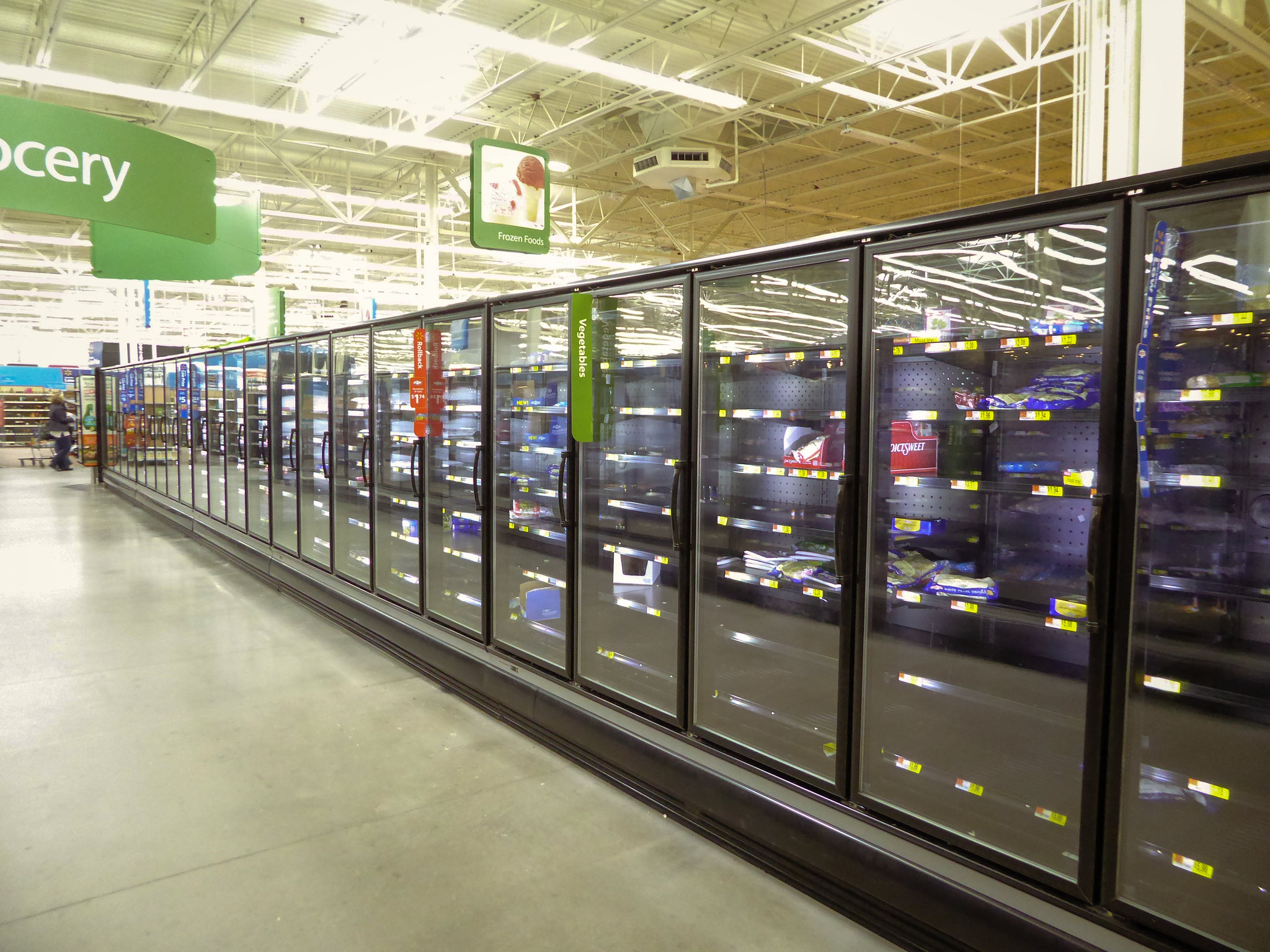
In November 2026, hackers remotely manipulated refrigeration systems across European supermarkets, forcing retailers to discard vast quantities of spoiled food.
Stores in eight countries were affected. Refrigeration settings were altered remotely, turning what should have been an ordinary overnight operation into an expensive exercise in damage limitation.
And here’s what makes this particularly troubling.
The equipment hadn’t necessarily broken down. The electricity hadn’t failed. Someone had simply gained access to the systems controlling it.
According to Reuters, the attacks followed similar incidents in France just weeks earlier. Europe’s cybersecurity authorities subsequently issued a joint warning.
We’ve spent years connecting supply chains, installing sensors, automating processes and building increasingly sophisticated dashboards. All promising greater visibility, efficiency and resilience.
Yet these incidents expose an uncomfortable contradiction.
What happens when the systems telling you everything is fine are themselves part of the problem?
I think the answer points to something fundamental about supply chain resilience. The real advantage isn’t how much information we collect.
It’s how much time trustworthy information gives us to prevent a loss.
The Visibility Illusion
There’s an important difference between knowing what equipment reports and knowing what’s actually happening to the products it protects.
A refrigerated cabinet might report an acceptable temperature at its cooling outlet. Meanwhile, products stacked too high, a blocked vent or a deteriorating door seal could leave the goods themselves dangerously warm.
The controller isn’t necessarily malfunctioning. It’s measuring something different from what the business needs to know.
I discussed this recently with Guy Yehiav, President of SmartSense by Digi, on my Resilient Supply Chain podcast.
Guy made a deceptively simple point: the temperature reported by refrigeration equipment isn’t always the temperature experienced by the products inside it.
For pharmaceutical distributors, food manufacturers and grocery retailers, that distinction can have serious commercial and safety consequences.
The US Centers for Disease Control and Prevention recommends digital data loggers with buffered temperature probes for vaccine storage because they better reflect vaccine temperatures than ordinary air-temperature measurements.
This principle extends across industrial operations.
A dashboard showing that machinery is running tells you very little if the process is quietly producing defective goods. A vehicle reporting its location doesn’t establish that its cargo remains undamaged.
Measuring the wrong thing more frequently doesn’t make an operation safer. It simply generates more data.
And data, however abundant, is no substitute for reliable operational intelligence.
When Connectivity Becomes a Shared Vulnerability
Remote connectivity delivers genuine benefits. Equipment can be monitored across thousands of sites, faults identified early and maintenance scheduled without constant physical inspections.
But connectivity also creates exposure.
The recent refrigeration attacks revealed how compromised control systems can turn a cybersecurity incident into an immediate physical and commercial loss.
There’s another danger here: common points of failure.
When multiple facilities depend on similar controllers, software or remote maintenance arrangements, a vulnerability in one technology can potentially expose many locations simultaneously.
An organisation might believe it has diversified operational risk across hundreds of facilities while unknowingly concentrating its technological exposure.
Earlier today, the BBC revealed that UK authorities and cybersecurity specialists had quietly coordinated an operation to protect tens of thousands of refrigeration units after vulnerabilities were discovered in widely used controllers. Thousands of controllers were disconnected from the public internet, sometimes requiring staff to physically unplug network cables and resume manual temperature checks. There was no evidence those UK systems had been maliciously accessed, but the incident demonstrated how a shared technological weakness could threaten operations across an entire industry.
Independent monitoring offers one layer of protection.
By comparing readings from equipment controllers with separate sensors measuring actual conditions, operators may detect discrepancies that would otherwise go unnoticed.
Guy described how combining temperature readings with door sensors and other measurements can help distinguish a failing component from an open door or potentially manipulated control settings.
However, separate monitoring doesn’t eliminate cybersecurity risk. Those systems also require secure configuration, access controls, maintenance and incident-response procedures.
The UK’s National Cyber Security Centre recommends layered protection and carefully controlled connectivity for operational technology.
For executives, the strategic question isn’t whether every asset is connected.
It’s whether the organisation can independently verify critical operating conditions and maintain safe operations when a connected system fails or is compromised.
A shared view of operational data doesn’t require every device to share the same network. In some circumstances, separating those functions is precisely what makes the architecture more resilient.
The Alarm Nobody Believes
Even accurate information is worthless if nobody acts on it.
One of the most revealing stories Guy shared involved a US pharmacy operation whose previous monitoring system had generated frequent false alarms.
Imagine being woken at two in the morning, driving to a store because you’ve been warned that refrigeration equipment is failing, and discovering that absolutely nothing is wrong.
Now imagine that happening repeatedly.
Eventually, the warning stops commanding attention.
Following deployment of a replacement system, a store manager received a genuine alert while on holiday in Mexico. He didn’t respond. The escalation process eventually notified a regional manager, who drove approximately 90 minutes to investigate.
According to Guy, her intervention saved roughly $50,000 worth of vaccines.
That’s a company-reported example rather than an independently audited result, but it illustrates an important principle.
A false alarm doesn’t merely waste time. It damages confidence in the next alarm, which might be genuine.
Across hundreds or thousands of locations, even a modest proportion of unnecessary alerts can create an enormous operational burden.
AI-assisted analysis can help by comparing sensor readings, recognising unusual patterns and suggesting likely causes. A damaged door seal demands a different response from a failed compressor or a compromised controller.
But suppressing alarms too aggressively creates its own risks.
The objective isn’t simply fewer alerts. It’s identifying genuine problems early enough to prevent losses, without overwhelming the people responsible for responding.
Monitor false positives, missed incidents and escalation performance. Measure how many alerts produce useful interventions.
Because the scarce resource isn’t sensor capacity.
It’s human attention.
Information Has a Use-By Date
Consider a pharmaceutical shipment travelling from a manufacturing facility to a distribution centre.
With a conventional temperature logger, conditions may be recorded throughout the journey but reviewed only when the shipment arrives.
If a temperature excursion occurred several hours earlier, the goods might already be entering the next stage of distribution before anyone discovers the problem.
Retrospective records can establish what happened. They cannot necessarily prevent it.
Real-time monitoring changes the possibilities.
An operator might contact the carrier, investigate the cause, redirect a vehicle or arrange an intervention while corrective action remains feasible.
None of this guarantees the product can be saved. Potentially compromised medicines still require proper quality assessments, and decisions must follow established safety procedures.
But timely information creates an opportunity that retrospective reporting cannot.
The opportunity to act before the consequences become irreversible.
The same logic applies to a failing conveyor motor, an overheating transformer or a critical manufacturing asset.
A warning delivered five hours before failure has very different business value from the identical warning delivered five minutes afterwards.
This has implications for how we assess technology investments.
Information quality matters enormously. So does accuracy. But we should also ask whether the information reaches the right people while meaningful options remain available.
Resilience Is Ultimately a Race Against Time
This connects to work associated with MIT professor David Simchi-Levi on two useful supply chain risk measures: time to survive and time to recover.
The framework, explored in MIT research on supply chain risk, examines how long a supply chain can continue operating after a disruption and how long restoring the affected operation will take.
If the supply chain can survive longer than recovery requires, it has an important buffer.
If recovery exceeds that window, business performance is likely to suffer.
We can apply a similar principle to everyday operational incidents, although this is an extension of the framework rather than a direct application of its original measures.
Consider the time required to detect a problem, diagnose it, reach someone authorised to intervene and complete the corrective action.
Now compare that with the time remaining before an unacceptable loss occurs.
That’s your practical intervention window.
Better sensing can shorten detection. Analytics can accelerate diagnosis. Clear escalation procedures can reduce delays. Predictive maintenance might prevent an emergency altogether.
But here’s where I think many technology strategies deserve scrutiny.
Businesses often concentrate on predicting disruptions further into the future. That’s valuable, certainly, but many failures remain inherently difficult to anticipate.
Sometimes improving response speed delivers greater value than pursuing another incremental improvement in forecasting accuracy.
Resilience isn’t simply about predicting what might go wrong. It’s about retaining the capacity to respond effectively when something does.
The objective isn’t perfect foresight.
It’s preserving options.
The Financial Case Is Bigger Than Spoiled Inventory
A failed refrigeration unit has obvious costs: spoiled products and repairs.
Less obvious are emergency technician premiums, staff time, disrupted operations and lost sales.
Consider a supermarket customer arriving to purchase meat for a family gathering, only to discover the refrigerated shelves are empty.
They might simply leave.
Suddenly, the retailer hasn’t just lost the value of spoiled stock. It has potentially lost an entire shopping basket and damaged the customer relationship.
What looks like a maintenance problem becomes a revenue problem.
Guy highlighted this broader commercial effect during our conversation. It’s a useful reminder that resilience investments shouldn’t be evaluated solely against equipment maintenance budgets.
There’s an environmental dimension, too.
UNEP and FAO research estimates that inadequate refrigeration contributed to the loss of approximately 526 million tonnes of food globally in 2017, equivalent to around 12% of food production.
That estimate concerns inadequate cold-chain infrastructure generally, rather than losses attributable specifically to monitoring failures. Nevertheless, it demonstrates what’s at stake.
Food that is produced, transported and subsequently discarded represents wasted water, land, energy, labour and capital.
Reliable refrigeration also needs to be energy-efficient, with refrigerant emissions properly managed.
A serious investment case should consider avoided spoilage, downtime, emergency maintenance, productivity losses, customer retention and compliance risks alongside deployment, integration, maintenance and cybersecurity costs.
Not every asset justifies continuous monitoring.
Start where the potential consequences of failure are greatest and earlier intervention can materially improve the outcome.
Five Questions Supply Chain Leaders Should Be Asking
If I were reviewing an organisation’s monitoring and resilience strategy, I’d begin with five questions.
1. Are we measuring what actually matters?
Does our monitoring reflect the conditions experienced by products and processes, or simply what existing equipment conveniently reports?
2. Can people trust our alerts?
How often do alerts lead to useful interventions? What’s the false-alarm rate, and how many genuine failures escape detection?
3. Can we operate when connected systems fail?
Can critical conditions be independently verified? Are there tested procedures for isolating compromised equipment and maintaining safe operations?
4. Where does response time disappear?
Is the bottleneck detection, diagnosis, escalation, decision-making authority or the intervention itself?
5. Are we calculating the full cost of failure?
Do investment decisions account for lost sales, customer disruption, regulatory exposure, employee time and recovery costs, rather than equipment repairs alone?
The answers should determine the technology roadmap, not the other way around.
Choose a high-consequence process. Establish a baseline for detection-to-intervention time. Test the response under realistic conditions, including outside normal working hours.
Then invest where shortening delays or improving decision quality creates measurable value.
The Real Advantage Is the Ability to Intervene
Supply chains will continue becoming more connected. We’ll deploy more sensors, more sophisticated analytics and increasingly capable AI systems.
That’s progress, provided we remain clear about what we’re trying to achieve.
Connectivity is a means, not an outcome.
A dashboard full of reassuring indicators offers little protection if the underlying measurements are misleading, alerts are routinely ignored or the response arrives too late.
The organisations that build lasting resilience won’t necessarily be those with the most elaborate monitoring platforms.
They’ll be the ones that know which information matters, can verify that it’s trustworthy and have the people, processes and authority to act while there’s still something worth saving.
Because ultimately, the most valuable thing a monitoring system can give your supply chain isn’t another alert.
It’s time.
And what separates resilient organisations from vulnerable ones is what they do with it.
I explored these issues in greater depth with Guy Yehiav, President of SmartSense by Digi, in episode 149 of my Resilient Supply Chain podcast. We discussed cold-chain cybersecurity, independent sensing, AI-assisted diagnostics, false alarms and the economics of operational resilience.
Listen to the full episode: Cold Chain Monitoring — When False Alarms Put Inventory at Risk.
Photo credit Fan of Retail on Flickr
Leave a Reply