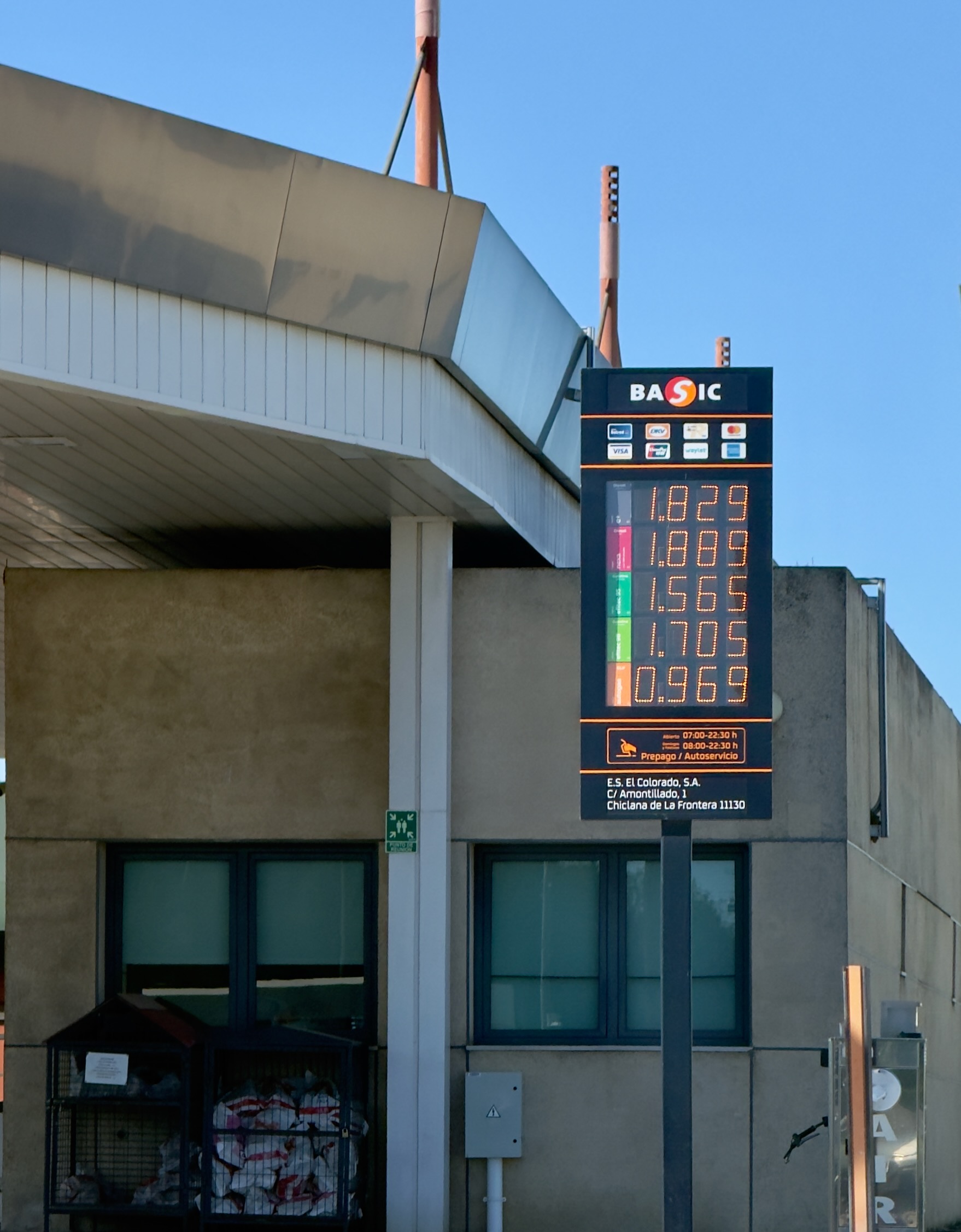
The economic damage lands long before the fuel bill does.
It shows up when diesel spikes and haulage costs creep into food prices. It shows up when a factory’s energy budget gets blown apart by events on the far side of the planet. It shows up when governments start muttering about emergency reserves, rationing, and support packages, as if this were all some freak accident rather than the predictable consequence of tying modern economies to volatile fuels moving through fragile chokepoints.
That is the hook. That is the human story. And that is why this matters now.
We still talk about fossil fuels far too often as if they are the safe, grown-up option. The dependable one. The pragmatic one. But that framing is wearing thin. Rapidly. Because the more you look at the data, the more obvious the contradiction becomes: fossil fuels are not just a climate problem. They are an economic liability, a geopolitical vulnerability, and a standing source of instability.
That does not mean renewables solve everything by magic. They don’t. You do not get resilience by scattering a few solar panels about and declaring victory. You need grids, storage, transmission, flexibility, demand response, digital controls, planning reform, and faster permitting. Real systems work is required. Serious work. But those are infrastructure problems. Build problems. Investment problems. Policy problems. They are difficult, yes. They are also solvable.
Fossil fuel dependence is different. It keeps reintroducing the same exposure, over and over again.
And that is the argument at the centre of my latest Climate Confident bonus episode: fossil fuels are instability in a bottle, while electrification, clean power, storage and stronger grids are increasingly the path to something better. Cleaner, obviously. But also steadier. Cheaper. More sovereign. More resilient.
The data says…
Start with power.
According to the IEA’s Electricity Mid-Year Update 2025, renewable generation overtook coal globally in 2025, with coal’s share of total generation dropping below one-third for the first time in a century. Solar PV and wind are central to that shift, with their combined share of global electricity generation rising from 15% in 2024 to 17% in 2025 and nearly 20% by 2026.
That is not a niche trend. That is system-level change.
And the cost story is just as stark. IRENA’s Renewable Power Generation Costs in 2024, published in July 2025, found that 91% of newly commissioned utility-scale renewable capacity delivered electricity at a lower cost than the cheapest new fossil-fuel alternative. Solar PV was, on average, 41% cheaper than the lowest-cost fossil alternative, while onshore wind was 53% cheaper. IRENA also estimates that renewables avoided USD 467 billion in fossil-fuel costs in 2024 alone.
Read that again. Avoided. USD 467 billion.
This is no longer mainly a moral case waiting for an economic case to catch up. In much of the system, the economics have already moved.
Now layer in what recent shocks are revealing. Reuters reported this week that record wind and solar generation in Great Britain in March 2026 avoided the need for gas imports worth £1 billion in a single month. Wind and solar produced 11 terawatt-hours of electricity, displacing the equivalent of 21 terawatt-hours of gas imports. Gas-fired generation fell 25% year on year to the lowest March level on record.
That is not symbolism. It is not green branding. It is not corporate mood music. It is hard cash. Less fuel bought. Less exposure carried. Less money burned.
The transport story points the same way. The IEA’s Global EV Outlook 2025 says the global EV fleet, excluding two- and three-wheelers, is on track to reach 250 million vehicles by 2030 under stated policies, roughly four times the level at the end of 2024.
That matters because electrification of transport is no longer just about tailpipe emissions. It is about reducing exposure to oil volatility. The more transport runs on domestically produced electricity rather than imported petroleum, the less damage each geopolitical shock can do.
The funniest part, in a bleak sort of way, is that some of the strongest recent arguments for clean technology have not come from climate campaigners at all. They’ve come from energy markets. Prices have started doing the persuasion.
The implications…
This is where the conversation has to get more honest.
For years, much of the public debate has framed the energy transition as a trade-off between climate virtue and economic realism. That frame is collapsing. What we are increasingly looking at is a trade-off between recurring fuel exposure and owned infrastructure.
A fossil-fuel system has to be fed constantly. Every barrel. Every cargo. Every shipment. Every pipeline flow. It depends on continuous extraction, continuous transport, continuous pricing power somewhere else in the system, and continuous luck. Luck that a war does not spread. Luck that a chokepoint does not tighten. Luck that a cartel does not squeeze. Luck that traders do not panic. Luck that your currency can absorb the hit.
That is not resilience. That is a business model built on recurrent external risk.
And when the shocks hit, they do not stay politely contained within energy markets. They leak outward. Into inflation. Into industrial competitiveness. Into food and fertiliser. Into logistics. Into public budgets. Into election cycles. Into popular anger.
This is one reason the affordability case for renewables and electrification is now inseparable from the security case. Energy security used to be discussed as a matter of securing fuel supplies. Increasingly, the smarter interpretation is reducing the need for volatile fuel supplies in the first place.
That is a profound shift.
It is also why domestic renewable capacity, electrification, storage and demand flexibility matter so much for countries that import large shares of their energy. They are not just emissions tools. They are exposure-reduction tools.
This is especially relevant for Europe and Asia, where imported fossil dependence remains high and price shocks travel fast. The same Reuters report notes that record wind output helped shield the UK from the worst effects of the current Middle East conflict, with wind accounting for around 42% of total power generation and helping limit exposure to surging gas prices.
Again, the point is not that Britain is finished. It clearly isn’t. The point is that even partial progress changes the shape of the risk.
That is what too many critics still miss. The clean-energy transition does not eliminate dependency altogether. It shifts it. Yes, batteries, transformers, grid equipment, power electronics, and critical minerals all matter. Manufacturing concentration matters. Trade policy matters. Industrial strategy matters. But that dependency is more front-loaded. You build assets. Then you own them. They keep producing value for years, sometimes decades.
A solar panel does not send you a monthly invoice for sunlight. A wind turbine does not care if a tanker corridor is tense this week. A battery does not suddenly triple its fuel bill because someone in a suit decided brinkmanship was good politics.
That distinction matters. A lot.
The strategies…
So what should leaders do with this?
If you are a business leader, stop treating the energy transition as a reporting exercise. It is not something to be delegated neatly to the sustainability team while treasury, procurement, operations and strategy carry on as before. That split is no longer defensible.
The questions are practical now.
Can you lock in clean electricity through a power purchase agreement?
Can you add onsite solar where it makes sense?
Can you deploy storage?
Can you electrify fleet vehicles?
Can you reduce exposure to oil- and gas-linked volatility across the supply chain?
Can you move heating loads to heat pumps or other electrified solutions where feasible?
Can you build demand flexibility into operations, so your organisation becomes less exposed to peak-price events?
Those are not fringe climate questions. They are operational questions. Margin questions. Risk questions.
If you are a policymaker, the answer is not more speeches. It is more delivery.
Permitting reform.
Transmission build-out.
Grid modernisation.
Storage deployment.
EV charging.
Heat pump incentives.
Smarter market design.
Interconnection.
Faster planning cycles.
This is not glamorous, but it is the work. The transition will not be won by rhetoric. It will be won by boring, high-impact infrastructure decisions made faster and better.
And there is a strong signal from the market that this is where things are heading anyway. Reuters reported that global renewable capacity rose to 49.4% of global electricity capacity in 2025, up from 46.3% in 2024, driven above all by solar.
That figure is worth dwelling on. Nearly half.
Not perfect. Not sufficient yet. But very far from marginal.
The signal of change…
There is one phrase I keep coming back to: pump anxiety.
For years, critics of EVs obsessively pushed range anxiety. And yes, range matters. Charging networks matter. Vehicle affordability matters. But whenever petrol prices jump, the discussion changes. Quickly. Because people are reminded that the old system is not normal. It is just familiar. And familiarity has a remarkable ability to disguise fragility.
That is the wider signal here.
The transition is no longer only being pushed by climate urgency, though climate urgency remains immense. It is being pulled by economics, by engineering, by geopolitics, and by basic common sense. Countries want more control. Businesses want more predictability. Households want lower running costs. Insurers want fewer shocks. Banks want steadier cash flows. Grid operators want flexibility. Industry wants stability.
Clean electricity, storage and electrification do not solve every problem overnight. Aviation, shipping, high-temperature industry and fertilisers still present hard challenges. But that is not an argument for delay where solutions are already available. It is an argument to move faster where the path is clear, so the harder sectors are left carrying a smaller burden later.
That is the deeper lesson.
Not that the transition is easy. It isn’t.
Not that the politics are tidy. They aren’t.
Not that the build-out happens by itself. It won’t.
But that the alternative, continued dependence on volatile imported fossil fuels, is not realism. It is recurring exposure dressed up as prudence.
And so we come back to the opening point. The bill arrives long before the invoice does. It lands in boardrooms, on household budgets, in national accounts, and in political systems already under strain.
The good news is that we are no longer short of alternatives. We are short of speed, coordination, and nerve.
That can change.
And it needs to.
If you want the fuller argument, and the sharper version of why I think fossil fuels are instability in a bottle (or maybe in a barrel) while clean energy is increasingly the path to electric independence, check out this latest bonus episode of Climate Confident+.
Leave a Reply